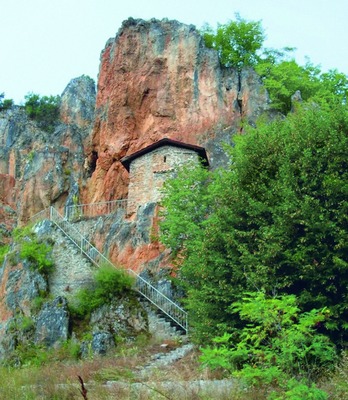
Village Trpejca , National Park Galicica on the shores of Lake Ohrid
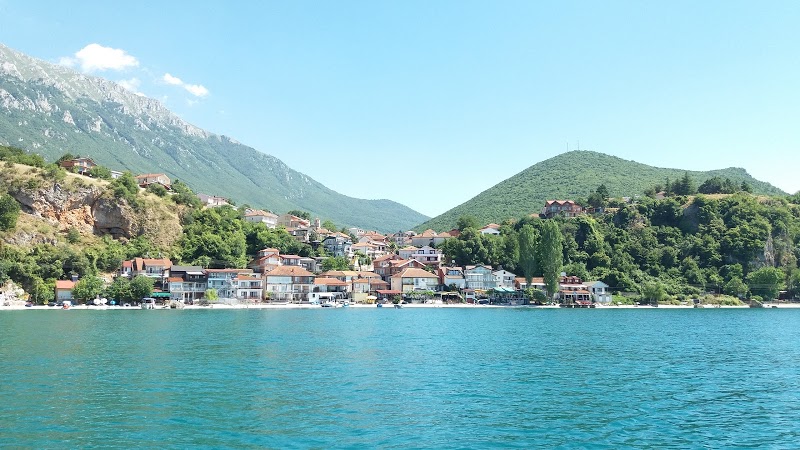
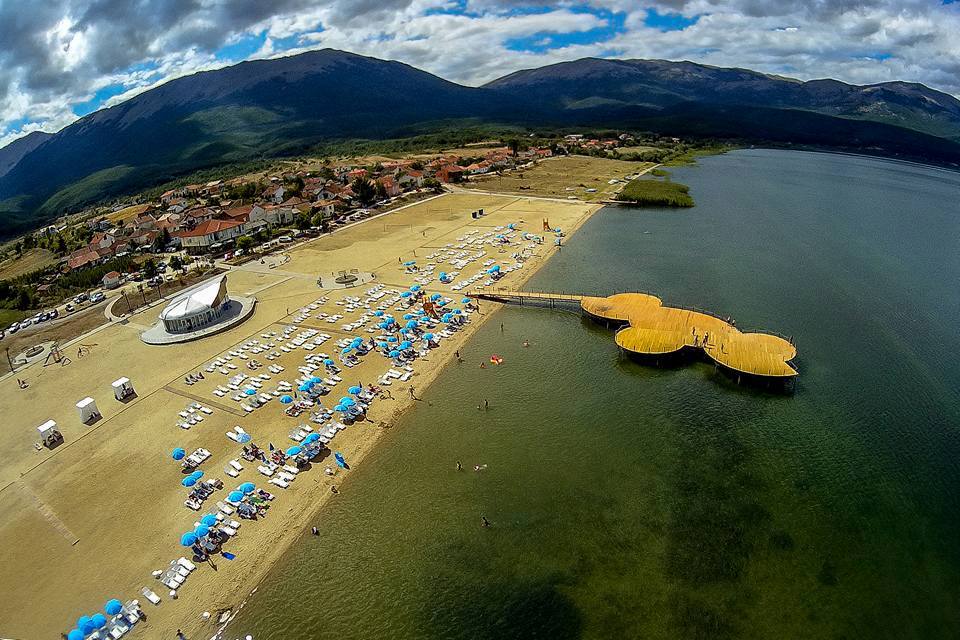
Trepeica is a village at the foot of Mount Galichitsa and along the shore of Lake Ohrid in Northern Macedonia. Traditionally a fishing village, it has recently become an upscale holiday destination, relying heavily on tourism in the summer months. Galichitsa National Park is a real outlet for tourists who come to Macedonia from noisy megalopolises. Here you will find beautiful nature with unique and only found flowers and trees, and many historical and ethnographic attractions.
Antique Amphitheater Ohrid
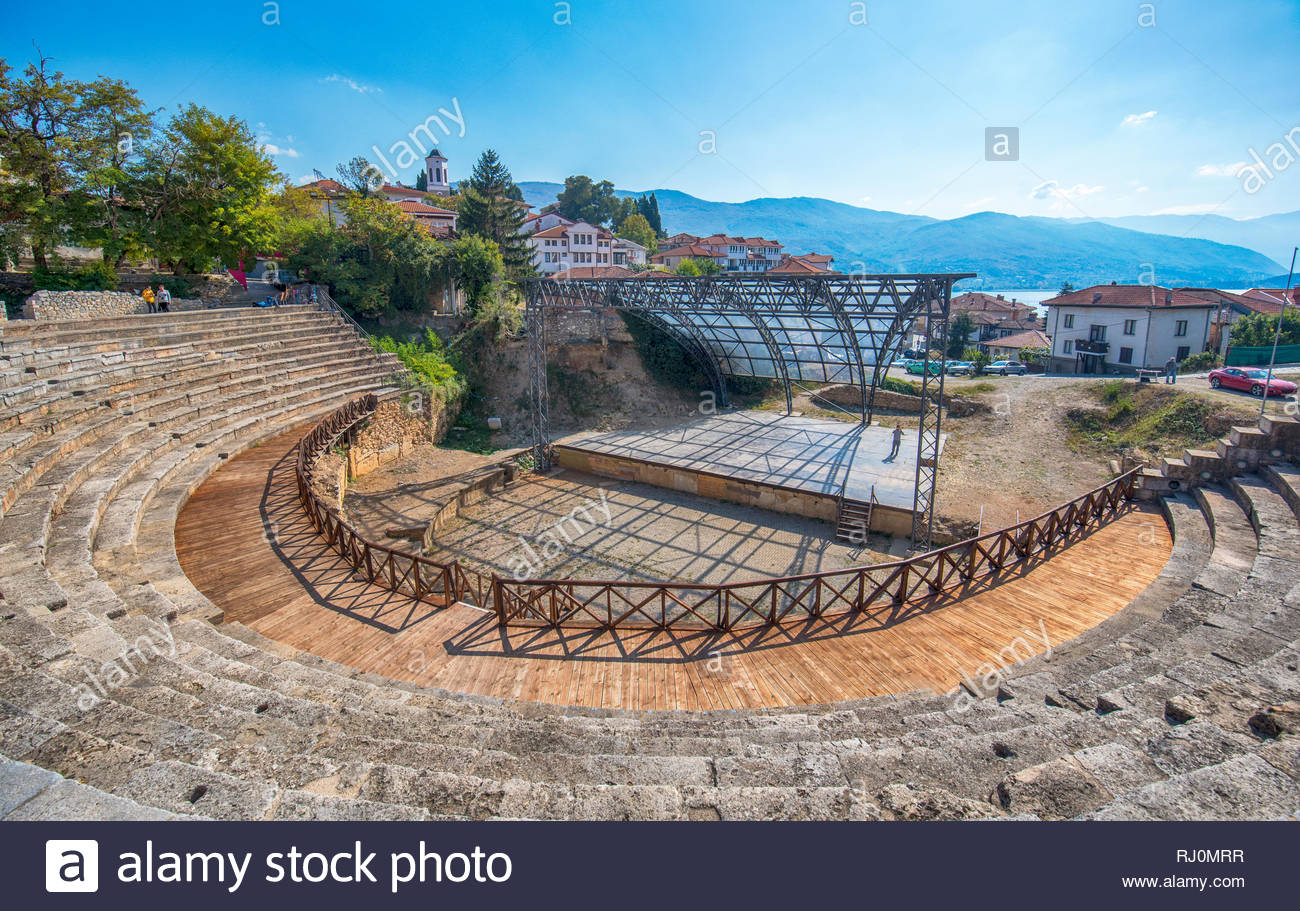
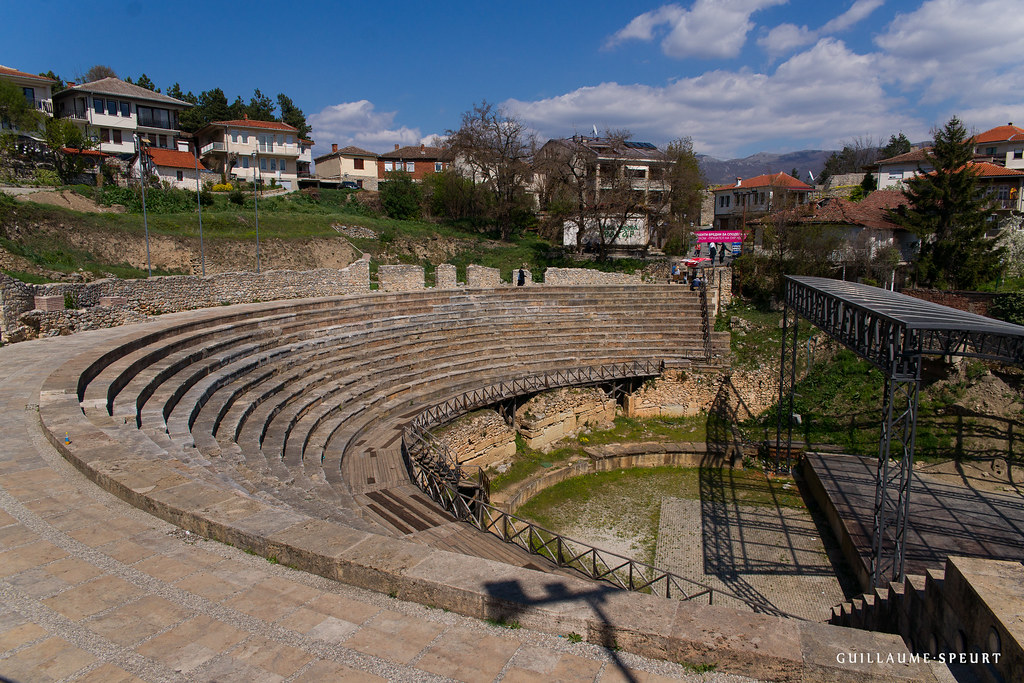
In the old center of Ohrid, near the sea coast, there is an ancient Hellenic amphitheater. It was discovered relatively recently and completely by accident. Meanwhile, the construction dates back to the two hundredth year BC. Oddly enough, but the amphitheater has been preserved pretty well. Currently, magical music nights are taking place on its stage. The construction refers to Hellenic, not Roman architecture, despite the fact that Roman amphitheaters in the Balkans are much more widespread.
Due to the fact that Ohrid is considered the most ancient Macedonian city, it is not surprising that the ancient amphitheater was discovered on its lands. The construction refers to Hellenic, not Roman architecture, despite the fact that Roman amphitheaters in the Balkans are much more widespread. True, the difference between them is not so obvious, and even more so now, when you have to deal only with ruins.
You can visit the Ohrid Amphitheater for free. Note that in addition to the attraction itself, it is interesting to admire the panorama of the city.
The fortress of King Samuel
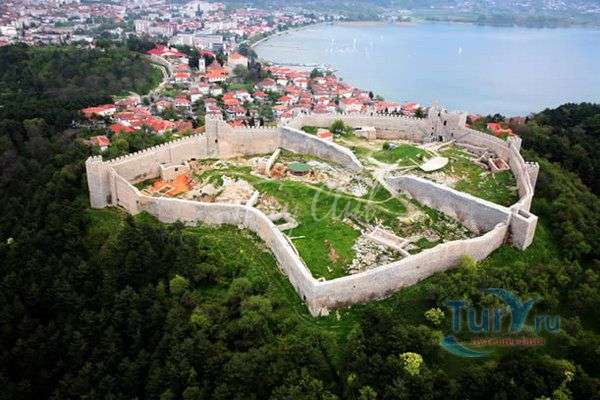
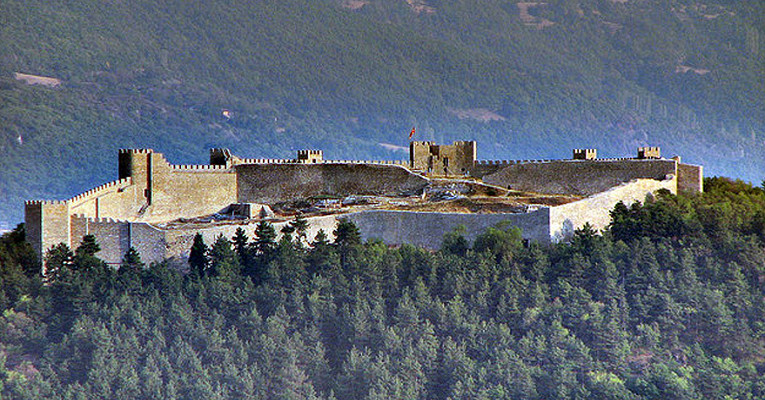
The fortress of King Samuel is one of the oldest and most used fortifications of Macedonia. The fortress is a visiting card and one of Ohrid's most popular tourist sites. The citadel begins its history back in the 3rd century BC. - it was precisely at this time that the first references to the fortress of the city of Lichnidos, built by King Philip II of Macedon and reputed to be the most impregnable in the Balkans, are dated. The fortress is a 3-kilometer-long building with powerful 16-meter walls and 18 massive towers. One wing descends firmly to the west coast of Lake Ohrid, and the other goes east to the upper gates, passes through them and rushes beneath the south. But only the south gate has survived to this day.
The castle was rebuilt several times, destroyed and rebuilt again, both before and after Samuel’s reign. And this can be clearly traced in the ruins of the old citadel. In the walls of the upper gate, stones with Greek inscriptions are preserved, and in the partially destroyed outer walls you can see horizontal layers of Byzantine brick. In addition to its protective functions, the fortress was also residential.
The modern history of the fortress of King Samuel begins in 2000, when archaeological research conducted on the site of the castle discovered many valuable finds, including the Golden Mask and the Golden Glove dating from the fifth century BC. In 2003, this historical monument was reconstructed.
The fortress offers very beautiful panoramic views of the lake and the city
Monastery of St. Naum
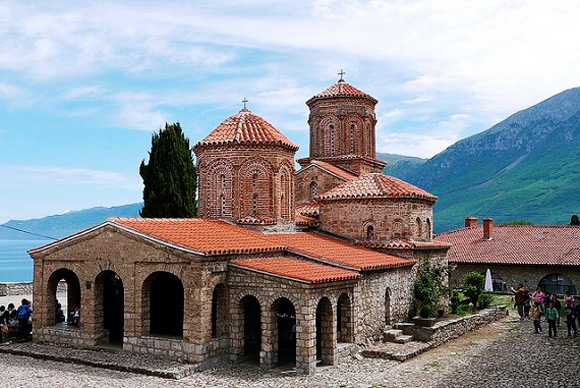
Excursions to the sights of Macedonia cannot be imagined without visiting the monastery of St. Naum. This is one of the oldest and most revered cloisters in the territory of the present Macedonian Republic. The monastery is located far from prying eyes, 30 km from Ohrid, on the shores of the lake of the same name Ohrid. According to historians, the time of the emergence of the monastery of St. Naum dates to the end of the 9th century. The founder of the monastery is considered to be St. Naum of Ohrid, who, in turn, was a disciple of Cyril and Methodius. Construction was facilitated by the then Bulgarian rulers Boris and Simon. Soon after the construction of the monastery, St. Naum died, and his body was buried in the monastery church.
The main shrine for which pilgrims and tourists seek to get here is a sarcophagus with the relics of St. Naum. They say that if believers put their left ear to the burial, they will definitely hear the heartbeat of the saint
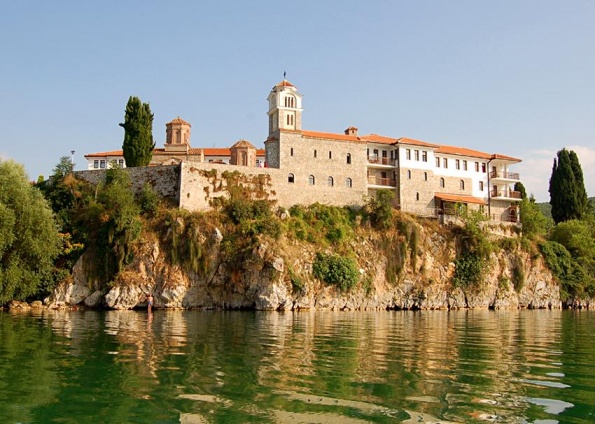
Museum of the water on Lake Ohrid
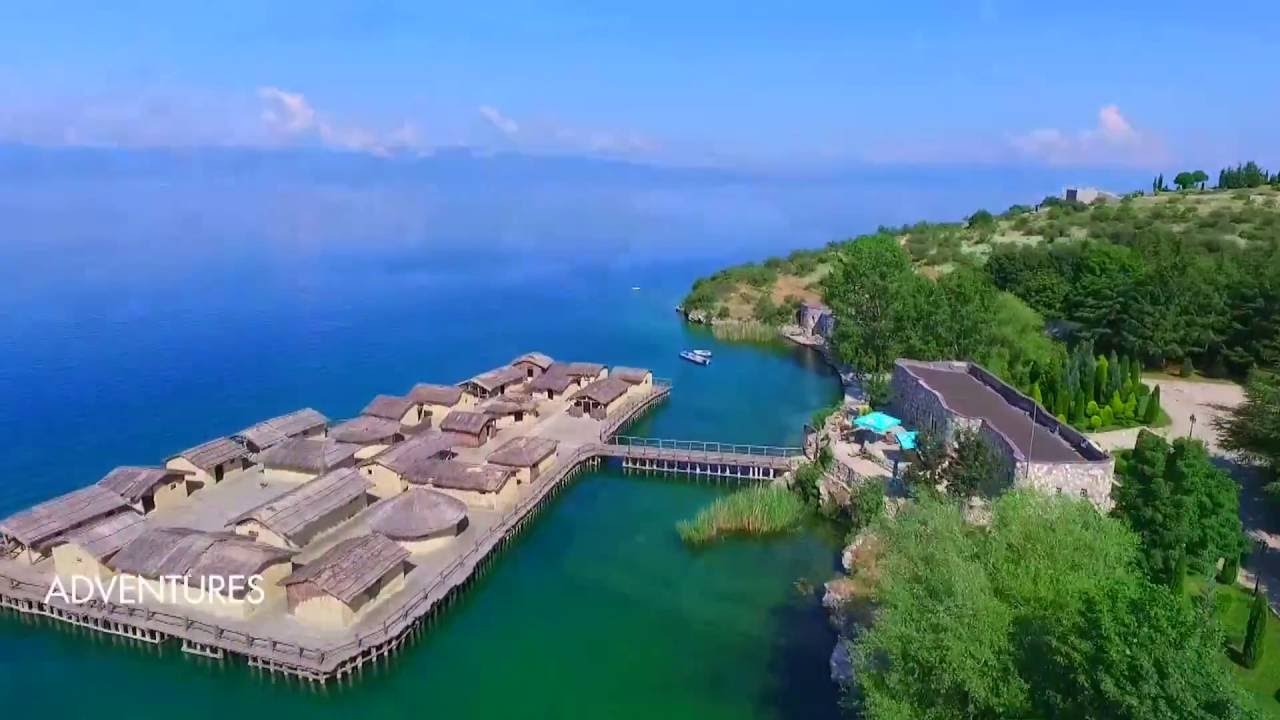
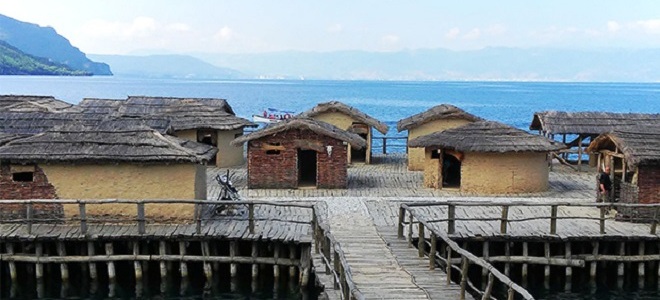
About 3 thousand years ago, on the Hradiste peninsula in Lake Ohrid, there was a small fishing village. He stood directly on the water, on a high wooden floor about 20 meters from the coast. The “Wooden Island” was connected to the land by a strong drawbridge. Rows of small wooden houses were built on top of the floor. They did not live in the settlement year-round, but only in the summer. Mention of an ancient fishing village can be found in the essays of the famous ancient Greek philosopher Herodotus. He wrote that at that time there were so many fish in Lake Ohrid that they scooped it out of the water with almost buckets.The Museum on the water has about a dozen equipped houses with traditional thatched roofs. Inside the houses, everything looks about the same as, according to researchers, it looked in prehistoric times. In the interiors you can find animal skins, looms, cradles, household utensils.Traces of the ancient village were first discovered in 1997 at the bottom of the lake. Along with the flooring, bridge and houses, evidence of human life was found: fragments of dishes, fishing tackle, the remains of cattle skeletons. The find turned out to be so rich and unique that it was decided to create a museum from the existing remnants of the settlement.Currently, in the Bay on bones (that is the name of the place on Lake Ohrid, where the settlement was discovered), you can see the recreated “floating settlement” that imitates the ancient fishing village as accurately as possible. The museum on the water has about a dozen equipped houses with traditional thatched roofs. Inside the houses, everything looks about the same as, according to researchers, it looked in prehistoric times. In the interiors you can find animal skins, looms, cradles, household utensils.It is worth noting that the Ohrid Water Museum is a rather unique place that has no analogues in the world. In addition to historical and cultural value, the museum also has a simple aesthetic charm. A particularly picturesque view of the museum opens from the lake. The beautiful landscape formed by the azure waters of Lake Ohrid and the green slopes of Gradiste gives this place a special romantic atmosphere.
Not far from the museum, on a hill, the ruins of an ancient Roman fortress were found, which gave the name to the entire peninsula (translated from Macedonian, “Gradiste” means “hillfort”). Next to it is the Archaeological Museum, camping, a souvenir shop and cafe. And north of the museum is the Amphora Diving Center.
"Plaoshnik" Church St. Panteleimon and St. Clement of Ohrid
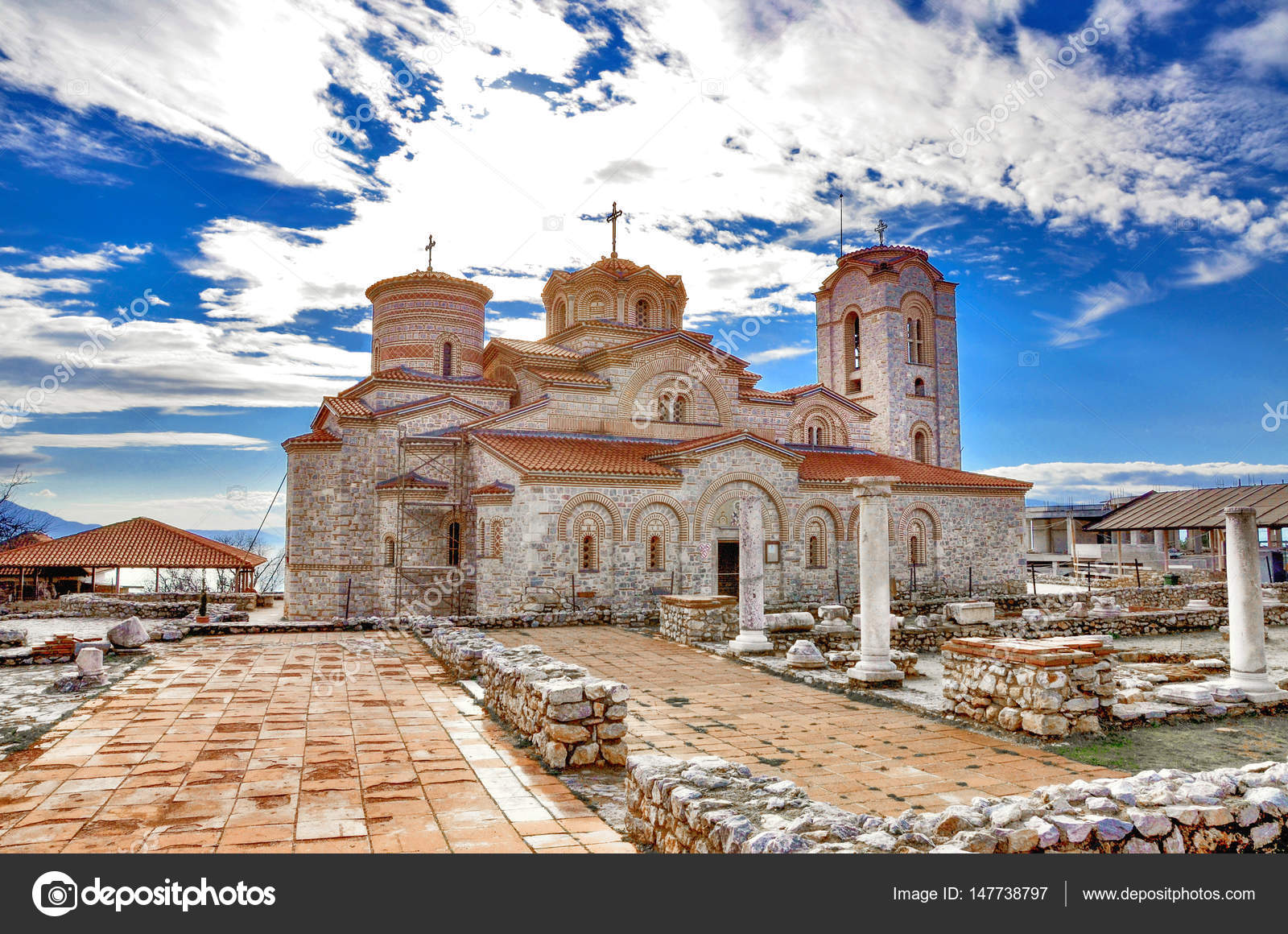
On the eastern coast of Lake Ohrid in a beautiful wooded area near the Samuil stronghold, there is a large archaeological site known as Plaoshnik. Most of the territory is occupied by the monastery of St. Panteleimon, restored according to the old original drawings. The next in line for the rise from the ruins of the building of the first Slavic University. And this is not all the surprises stored in the depths of Plašnik.
Church of St. Panteleimon
Initially, on the site of the modern church of St. Panteleimon, the church of St. Clement of Ohrid flaunted - one of the oldest buildings in the city. Despite the great religious and cultural significance, the church inherited a difficult fate. However, her contribution to the development of Slavic writing remains unprecedented. It is known that training centers worked at the monastery, and hundreds of students were kept in their education. After graduation, they went to the world with an educational mission: they distributed writing.
Initially, on the site of the modern church of St. Panteleimon, the church of St. Clement of Ohrid flaunted - one of the oldest buildings in the city.
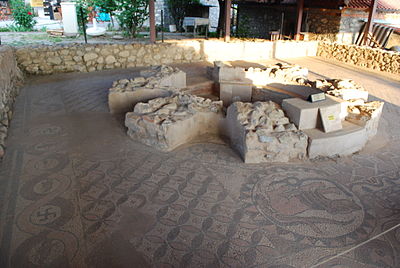
Church of St. Panteleimon has glass floors. Through them one can see the ruins of the church of St. Clement that previously existed here. In addition, under a glass cover you can see the marble sarcophagus, which stores the relics of St. Clement.
National Park Galichitsa
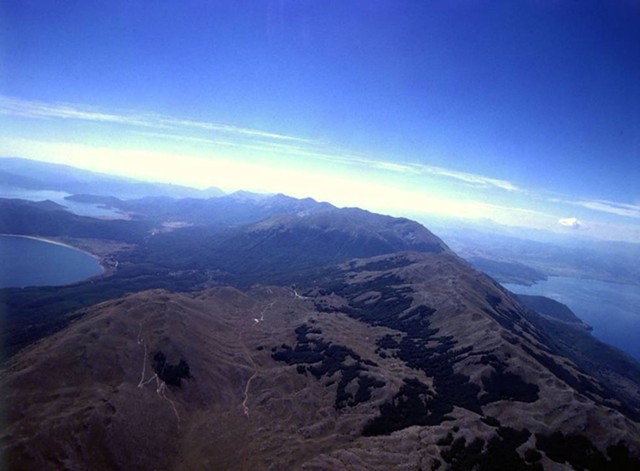
Galichitsa National Park is a real outlet for tourists who come to Macedonia from noisy megalopolises. Here you will find beautiful nature with unique and only found flowers and trees, many historical and ethnographic sights, and most importantly, an active and varied vacation. The Galichitsa National Park is located about 25 km from Ohrid and 50 km from Resen (for details on how to get, read below). The park is located exactly between the two main lakes of Macedonia - Ohrid and Prespa. And this is another reason to visit Galichitsa. The park owes its name to the mountain of the same name, although, by the way, it has several peaks, the highest of which is the two thousandth Magaro.
The main attraction of the Galichitsa National Park is the monastery of St. Naum. The medieval monastery attracts tourists not only with its preserved shrines and architecture of the 10th century, but also with springs, of which there are nearly 45 pieces.
Despite the untouched and unique nature, the Galichitsa National Park is well equipped for outdoor activities of tourists. There are comfortable, paved trails for backpackers, as well as for those who prefer cycling. The park has a huge area (more than 20 thousand hectares)
Prespa Lake
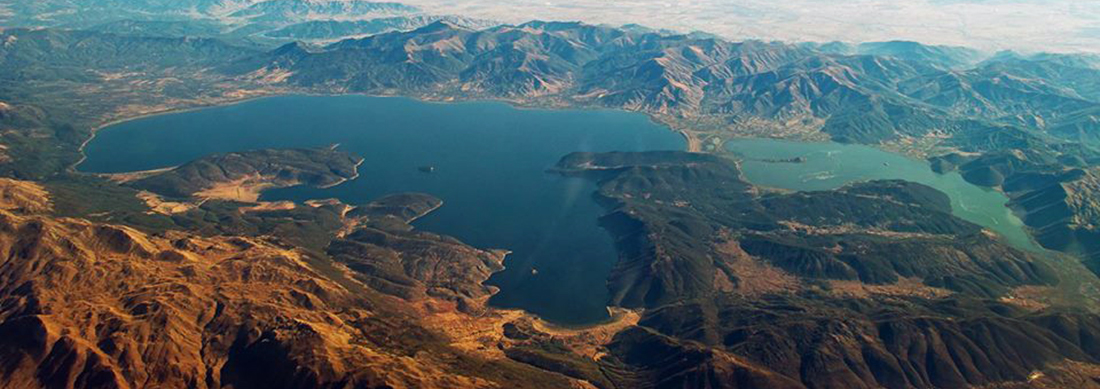
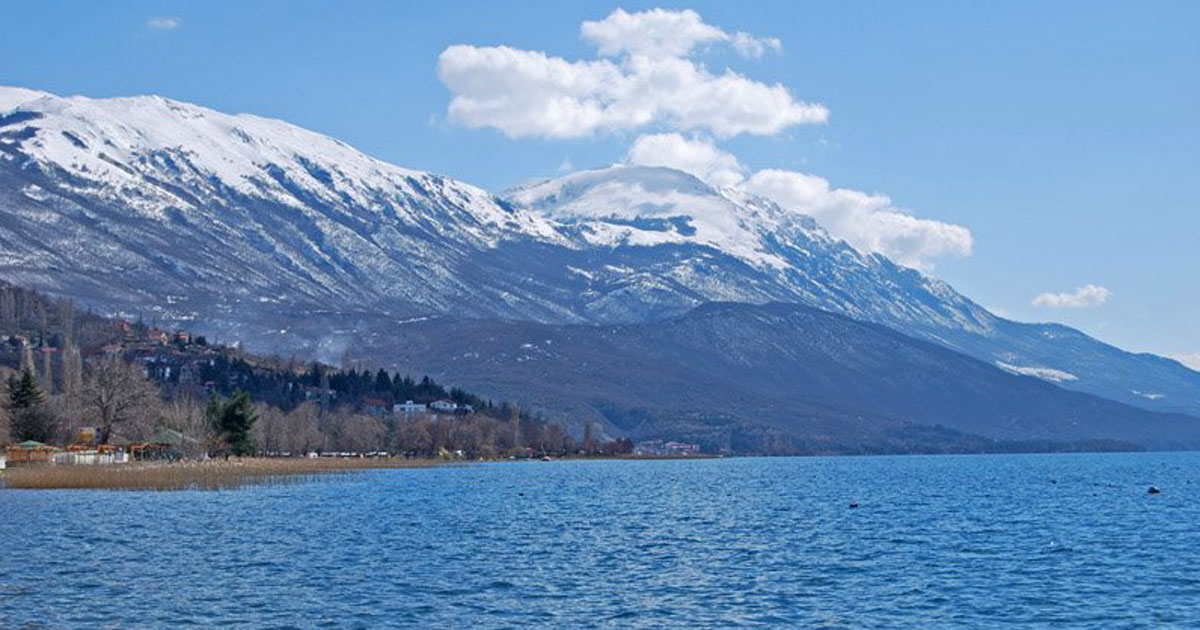
Lake Prespa, like its neighbor Ohrid, has an impressive age. According to scientists, the reservoir arose about 5 million years ago. By the way, little has changed since then: the lake is just as beautiful, clean and rich in terms of inhabitants and vegetation. The fact that Macedonia concluded a friendly agreement with Greece and Albania, declaring the reservoir a national heritage and a protected natural site, contributes significantly to the conservation of Lake Prespa.
On Lake Prespa, in addition to beautiful landscapes, you can admire the only island in Macedonia called Golem Grad, which means “Big City”. And although the island has long been uninhabited, here you can see the ruins of an ancient monastery in honor of St. Peter.
Vevchani spring
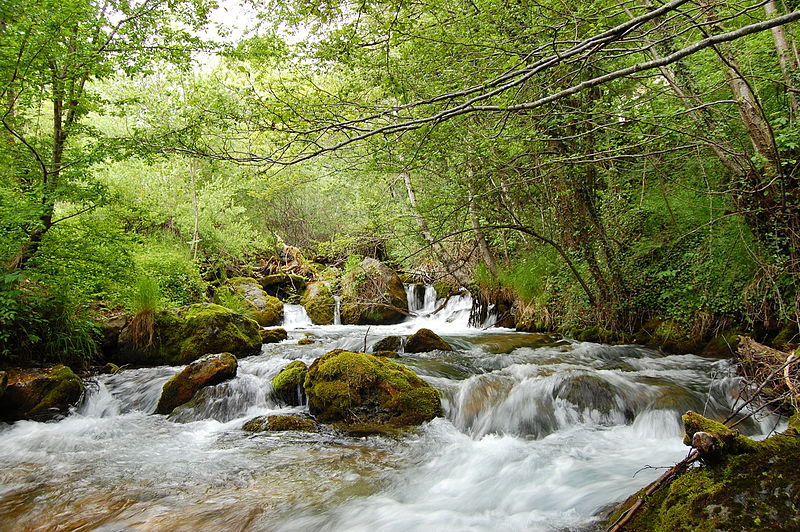
The large mountain village of Vevchani, which is located at an altitude of 900 meters above sea level on one of the slopes of Mount Yablanitsa, is known in Macedonia for being in the center of a big scandal in the 90s of the last century. Then, in the neighborhood with her, they decided to build a village with fashionable hotels, sanatoriums, designed to relax the party elite of Yugoslavia. To provide hotels with water, they wanted to stretch pipes from Vevchan. Water in the village was supposed to come from Vevchanskie springs - the main local attraction.
The main spring beats in a small cave located at an altitude of 960 meters above sea level, and then merges with the local river Vevčanska, 6 km long, which flows under the village of Veleshta into the river Crni Dream. Water in the spring enters the surface at a speed of 1,500 liters per second. In a dry summer, the source dries. A little lower than the cave there are 7 more springs, the water in which has the same qualities as in the main one.
The river flowing through the village is able to rotate the mill wheel. This was used by the ancestors of the current villagers who put a water mill here.
Kalishta
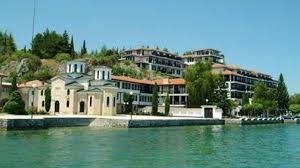
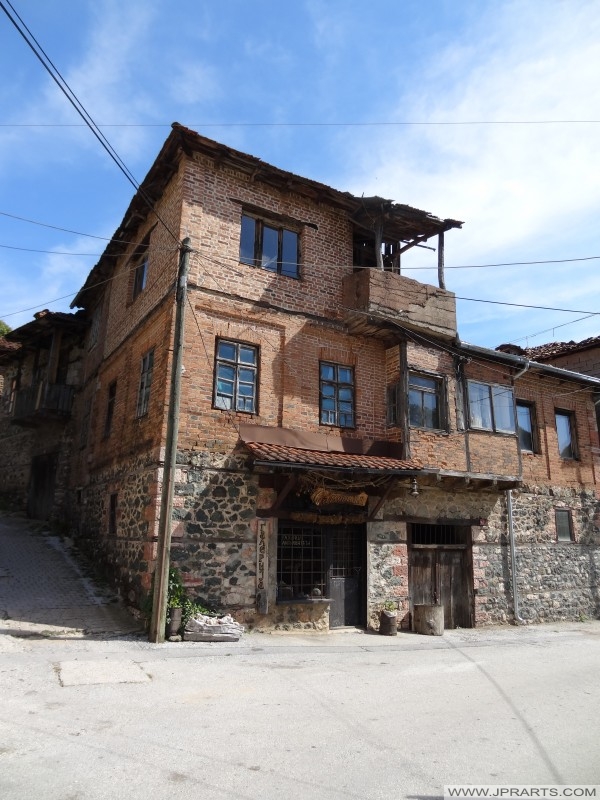
Five kilometers southwest of Struga, directly on the shore of the lake, is a village famous for its old churches and fish dishes.
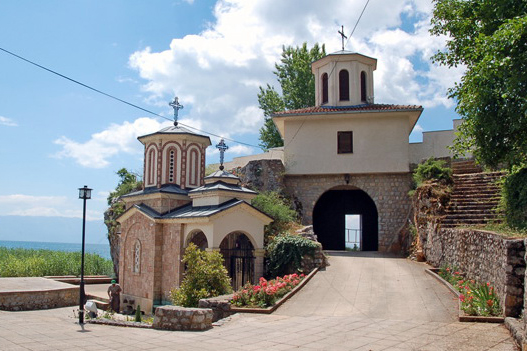
In the area of Kalishta, on the very shore of Lake Ohrid, in natural rocky surroundings, there is the monastery of the Nativity of the Blessed Virgin Mary, popularly known as Kalishki Monastery. The monastery complex consists of one cave and a newer church dedicated to the Nativity of the Blessed Virgin Mary, a church dedicated to the holy apostles Peter and Paul and a cave church dedicated to St. Athanasius. The new church was restored in 1977, on the foundation of an old church of the 13th century. This monastery is active and an active monastic life takes place in it.
Radozda
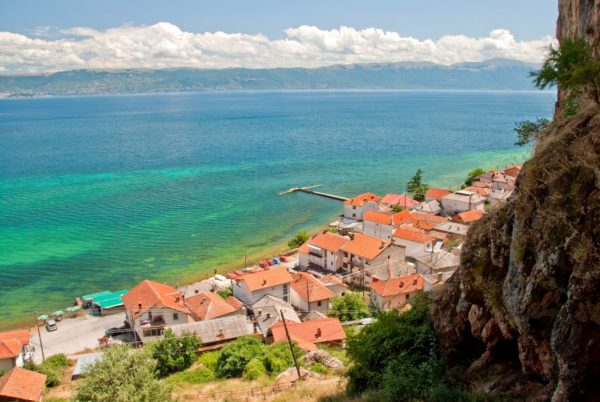
Most of the frescoes found date back to the 14th century, with the only one preserved in the 13th century, with the play "The Miracle in Iona" - painted in honor of the patron of the church.
The painter who painted this character is presented to us not only as a gifted master, but also as an advanced creator who exhibits new unknown artistic ideals - embodying the character's inner suggestiveness.